
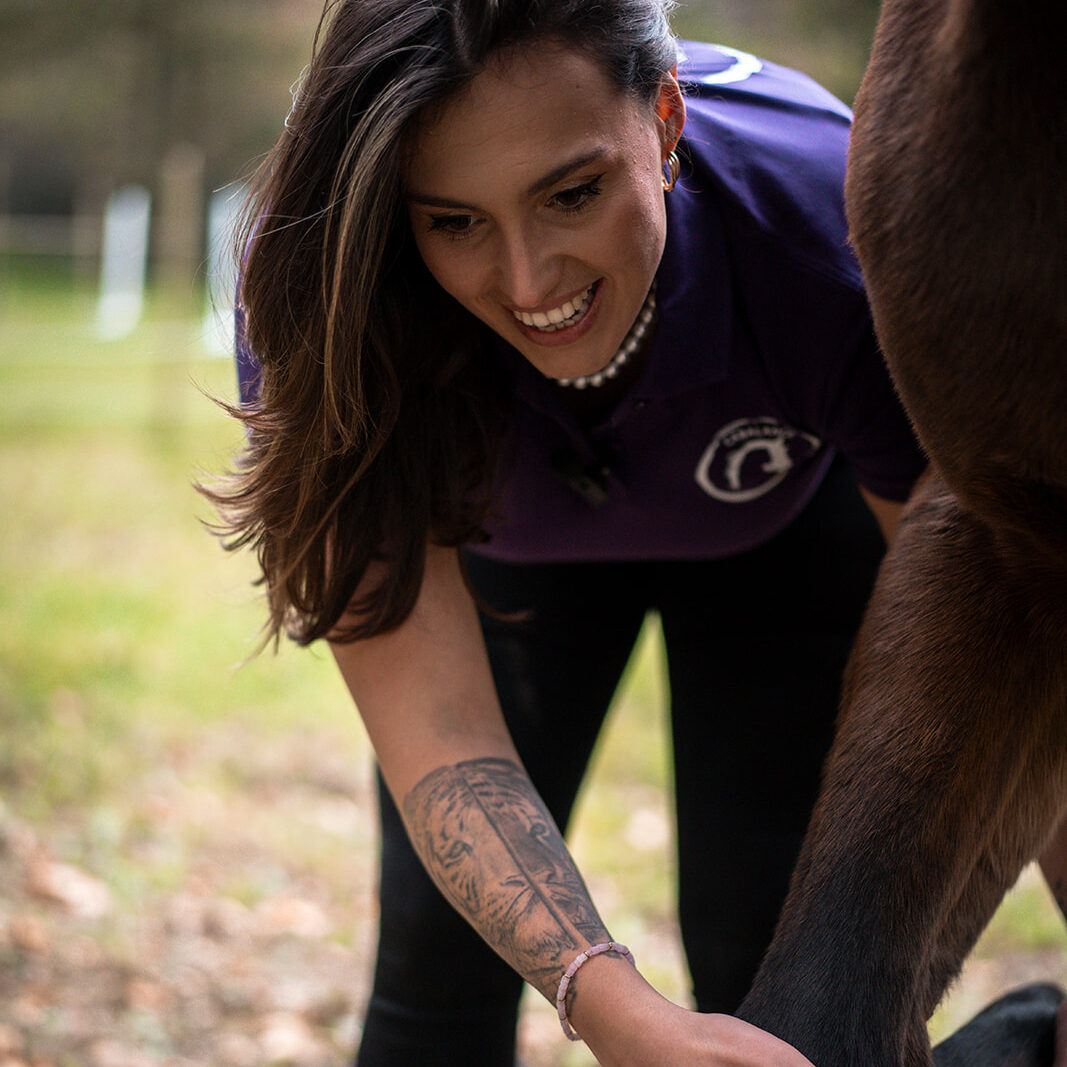
Holistic Equine Osteopath
Your horse does not move well under the saddle or continues to build up tension while riding. Your horse feels stiff or blocks in certain exercises.
As a holistic equine osteopath, I look beyond the visible problem. I map the entire system; body, behavior and cooperation.
Not treating the symptoms, but an approach that delivers targeted breakthroughs and real progress.
What is osteopathy for horses?
Osteopathy starts from one simple idea: the body is one whole.
Muscles, joints, organs, connective tissue, fascia, and the nervous system… continuously influence one another. When movement is restricted somewhere, the body compensates. That compensation can show up as tension, reduced performance, behavioural changes, unexplainable symptoms, or recurring issues.
An osteopath does not only look at where it hurts or where discomfort is present. The focus lies on the cause behind the complaint. Where is freedom of movement limited? Which structures are no longer working together optimally? What is the body trying to compensate for?
Through targeted, gentle manual techniques, the body is supported in restoring its freedom of movement and activating its self-healing capacity.
This does not mean cracking or forcing. It means listening, feeling, and supporting at the right moment.
As a holistic equine osteopath, I look beyond the surface to understand what is truly at play. To find that first domino.
What does holistic really mean?
Working holistically means the body is never viewed in isolation. It does not stand alone.
A horse does not exist as separate parts. The bond you have as an owner or rider influences how the horse experiences the world. We influence training. Training influences movement patterns. Nutrition influences muscle recovery. Stress influences tension. Housing influences behaviour. Emotions influence the body. And from there, everything continues to interact—visible and invisible. Everything continuously influences one another.
Within my approach, I look at four levels:
The mechanical and functional level: movement, joints, muscles, fascia
The biochemical level: nutrition, supplementation, internal processes
The emotional and mental level: tension, experiences, behaviour
The energetic level: herd dynamics, environment, balance, and vitality
These levels overlap. A restriction is rarely purely physical. A behavioural change is rarely purely mental. Only when the whole is observed does real direction emerge.
Holistic work is not a vague concept. It is a way of seeing that respects the complexity of the horse.
How does a session at Cabalancé take place?
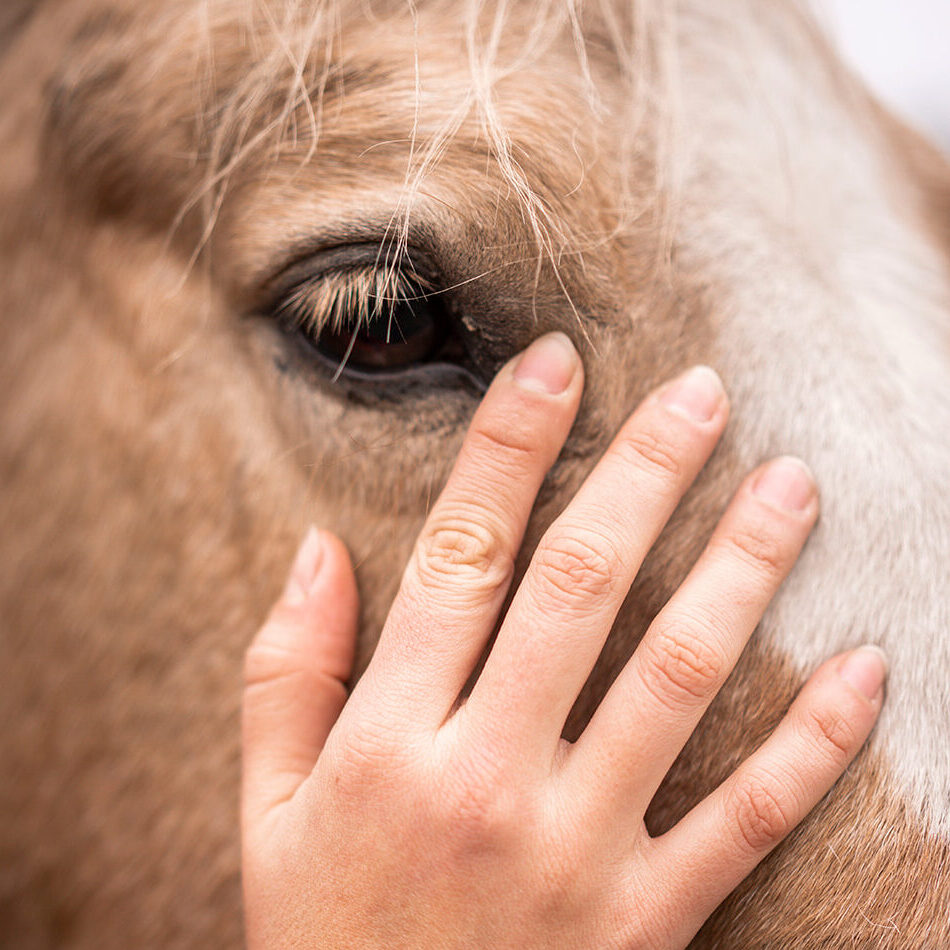
Every session begins with observation. I look at how your horse stands, moves, breathes, and responds. I listen to your story. What do you feel while riding? What has changed? Which actions have you undertaken so far?
This is followed by the manual assessment (palpation). By feeling where tension is present, where movement is restricted, and where the body compensates, a clear picture begins to form. The treatment itself is done through gentle manual techniques. No forcing. No quick corrections. Instead, precise impulses and movements that invite the body to release.
Sometimes this means working subtly. Sometimes it means guiding the horse through a tough moment of tension so the body can release old patterns. Always with respect for what the horse can handle.
After the treatment, you receive clear feedback. What was found. What needs attention. What you can do yourself. No vague terminology, but a concrete plan and report.
Clarity First

Performance Improvement
When does a horse benefit from osteopathy?
Holistic osteopathy can be valuable when you notice that:
performance plateaus without a clear reason
behaviour changes occur
rehabilitation is needed after injury
the body struggles to build muscle
you want to work preventively on balance
Osteopathy does not replace a veterinarian in acute or medical situations. It can, however, be a valuable addition within a broader care team.
My vision within holistic osteopathy
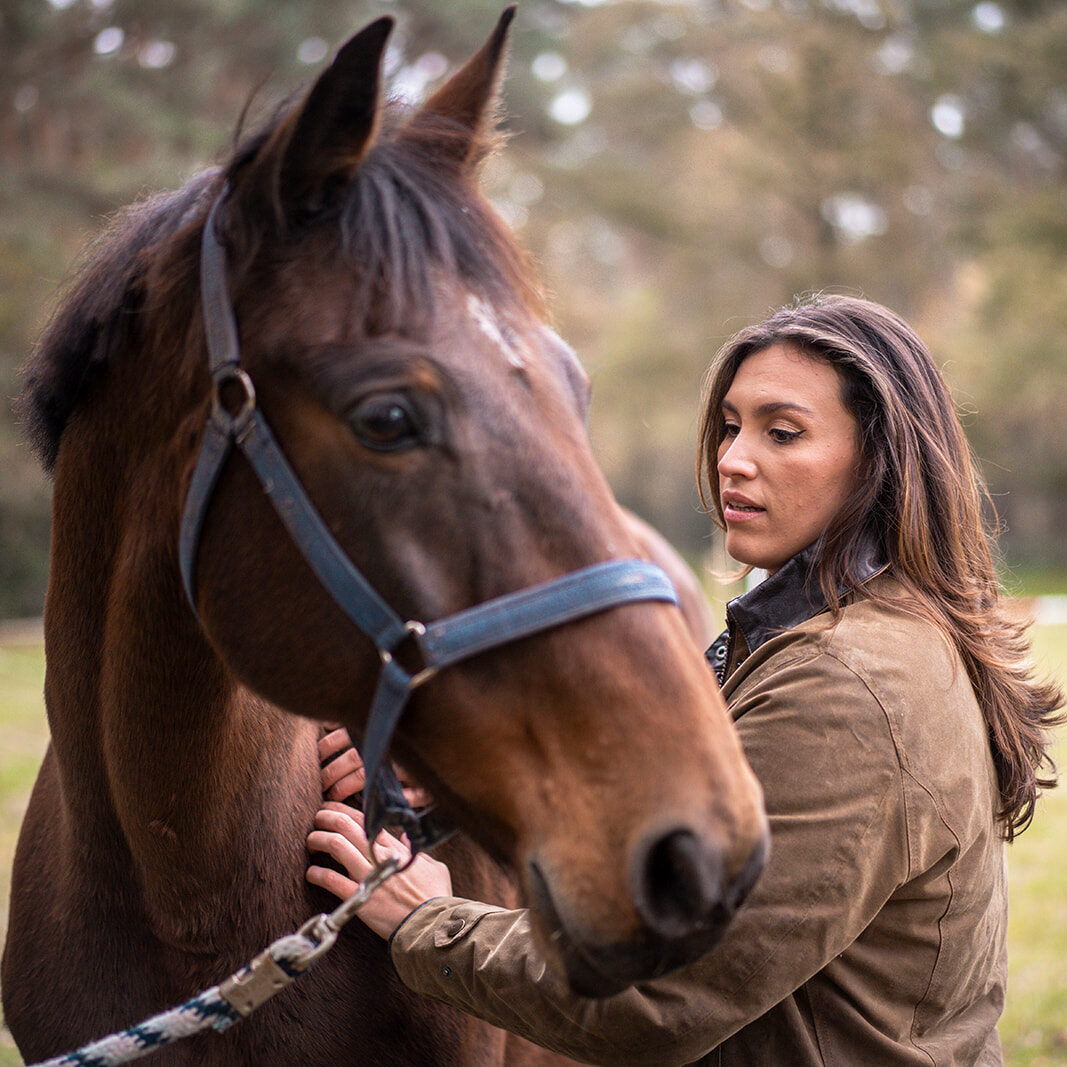
Horses give us everything. The least we can do is listen when their body speaks.
My work is not about quick success or temporary solutions. It is about refinement. About restoring balance so performance follows naturally instead of being forced.
I do not work on autopilot. Not ten treatments a day. Every horse receives the time and attention it needs. That also means I am honest when something falls outside my expertise and collaboration with other professionals is required.
When an osteopath, veterinarian, farrier, saddle fitter, dentist, trainer, and owner communicate better, progress becomes exponential. Every horse deserves a team that works together.
Holistic osteopathy within Cabalancé is therefore more than a treatment. It is guidance. Direction. Bringing calm into situations that feel complex.
Frequently asked questions and doubts
Osteopathy is based on anatomy, biomechanics, and physiology. Within my work, I combine manual techniques with grounded knowledge of nutrition, training, and management.
Yes, when performed correctly and with respect for the body. Gentle techniques stimulate the self-healing capacity without overloading the system.
That depends on the goal and the situation. In my experience, a single treatment is never sufficient. I work through structured programs to create lasting change.
Massage works mainly on muscle tissue. Osteopathy restores the body’s self-healing ability, balances the body structurally, and works on a visceral level. My treatments also include the craniosacral level. An osteopath therefore looks at the entire system and searches for cause and connection. When a bone is not correctly aligned, massage will not put it back into place. It can, however, be beneficial afterwards to maintain good blood flow, improve regeneration, and support longevity.
No, unless a veterinarian suggests otherwise. Sometimes light adjustments are needed. This is always tailored to the individual horse.